Kitchen Shutter Finishes Compared: Laminate vs Acrylic vs PU vs Membrane
Compare laminate, acrylic, PU and membrane kitchen shutters for Indian homes: look, heat, fingerprints, price ranges, and which finish fits each zone.
In this guide 8 sections
Your kitchen carcass is the skeleton. The shutter finish is the face you wipe after every tadka. In Raipur, Indore, Bangalore and similar Indian cities, that face sees steam, oil, turmeric and monsoon humidity every day. Laminate, acrylic, PU and membrane can all look fine in a showroom—and age very differently once the hob is lit. This guide explains what each finish is, how it behaves under Indian cooking, and which zones suit which option.
Finish vs Substrate
The shutter substrate is the board underneath (plywood, MDF, HDHMR). The finish is what goes on top: laminate sheet, acrylic sheet, sprayed PU, or vacuum-pressed membrane. Beautiful Homes (Asian Paints, Jul 2026) draws the same line: five finishes on one base board make five different kitchens. Earlier Make My Space posts cover carcass boards; this one is only about the face.
What Each Finish Is
Laminate (HPL). A thin decorative sheet—kraft paper, resin and a wear layer—bonded under heat and pressure, then glued to the shutter. Beautiful Homes calls it the most widely used finish in Indian homes: wide colour and texture range, strong scratch resistance (especially matte), easy wipe-downs. Homeli (May 2026) treats it as the workhorse for hard-working surfaces. WoodAge (updated Aug 2026) notes BIS IS 2046 covers decorative laminated sheets—so name the brand and grade, not just “HPL”.
Acrylic. A thick acrylic (PMMA) sheet—Beautiful Homes says typically 1–2 mm; Studio Matrx (May 2026) describes ~1 mm PMMA on MDF—bonded for deep, mirror-like gloss. It brightens small kitchens. Trade-offs: fingerprints show fast, fine scratches appear over years on dark colours, and edge bonding decides whether humidity reaches the substrate. Ask for the named sheet and backer, not “acrylic look”.
PU (polyurethane) paint. Multiple sprayed coats on a prepared shutter (often MDF), cured in controlled conditions. Beautiful Homes likens it to an automotive-grade finish: seamless colour, no edge-band joint, matte or gloss. Homeli is more cautious for kitchens—custom colour and seamless look, but more edge-chip risk and costly repairs. WoodAge warns that “PU laminate” is vague: PU paint is a coating system; laminate is a factory sheet. Name the coating, sheen and cure process on the quote.
Membrane. A thin PVC/vinyl foil (Studio Matrx: roughly 0.3–0.4 mm) vacuum-pressed over CNC-routed MDF so the film wraps face and edges. Beautiful Homes positions it for shaped or profiled shutters—raised panels, shaker styles—without a separate edge band. FurniRevive and Studio Matrx flag the same Indian-kitchen weakness: heat softens the foil near the hob; peeling usually means full shutter replacement.
How They Behave Day to Day
| Stress | Laminate | Acrylic | PU | Membrane |
|---|---|---|---|---|
| Oil / tadka wipe | Strong, especially matte | Wipes clean; marks show until wiped | Smooth sealed face; chips from impact | Fine while foil intact |
| Fingerprints | Matte/textured hide well | Show immediately on dark gloss | Depends on sheen | Medium |
| Heat near hob | Generally forgiving if edges sealed | Keep clear of direct heat | Better than foil; still use clearance | Weakest—avoid hob zone |
| Edge / moisture | Edge-band lift if banding is poor | Edge + substrate damage if bond fails | Chip exposes substrate | Foil lift at routed edges |
| Repair | Replace one shutter | Buff or replace panel | Colour-match often visible | Usually full re-skin |
Studio Matrx’s May 2026 ageing notes put membrane next to the hob as the classic mismatch—foil softens around 60°C+ under steam. Homeli’s rule for humid coastal kitchens: laminate on bases, acrylic optional on uppers, PU for showpieces only.
Indicative Price Ranges
Shutter prices are quoted as finish-only, planning shutter rate, or installed with hardware. These are from pages we read—not Make My Space quotes—and move with brand, city, substrate and GST.
| Finish | Published range | Basis | Source & date |
|---|---|---|---|
| Laminate | ₹400–₹900 / sq ft | Finish cost only | Beautiful Homes, Jul 2026 |
| Acrylic | ₹700–₹1,400 / sq ft | Finish cost only | Beautiful Homes, Jul 2026 |
| PU | ₹1,200–₹2,500 / sq ft | Finish cost only | Beautiful Homes, Jul 2026 |
| Membrane | ₹350–₹800 / sq ft | Finish cost only | Beautiful Homes, Jul 2026 |
| Laminate / acrylic / PU | ₹70–180 / ₹160–320 / ₹220–450 / sq ft | Per sq ft shutter (Chennai planning) | Homeli, May 2026 |
| HPL / acrylic / PU | ₹120–350 / ₹350–700 / ₹600–1,200 / sq ft | Planning shutter, Delhi NCR | WoodAge, Aug 2026 |
| Membrane / laminate / acrylic | ₹650–1,000 / ₹800–1,400 / ₹1,400–2,200 / sq ft | Installed shutter, 18 mm substrate | Studio Matrx, May 2026 |
Homeli notes that on a 10-foot kitchen, acrylic over laminate can add roughly ₹25,000–₹50,000. Studio Matrx finds acrylic roughly 1.5× to 2× laminate at install on an ~80 sq ft shutter face. Always ask which number is on your BOQ.
Zone-by-Zone Choices
- Hob and sink base runs — textured or matte laminate (Homeli, WoodAge).
- Upper units / living-facing tall units — acrylic or high-gloss laminate if you accept regular wiping; Studio Matrx keeps acrylic ~300 mm from the burner.
- Showpiece island or feature shutter — PU when custom colour and seamless paint matter more than impact risk.
- Profiled classical doors away from heat — membrane on a cool pantry wall; keep it off the cooking wall (Beautiful Homes, FurniRevive).
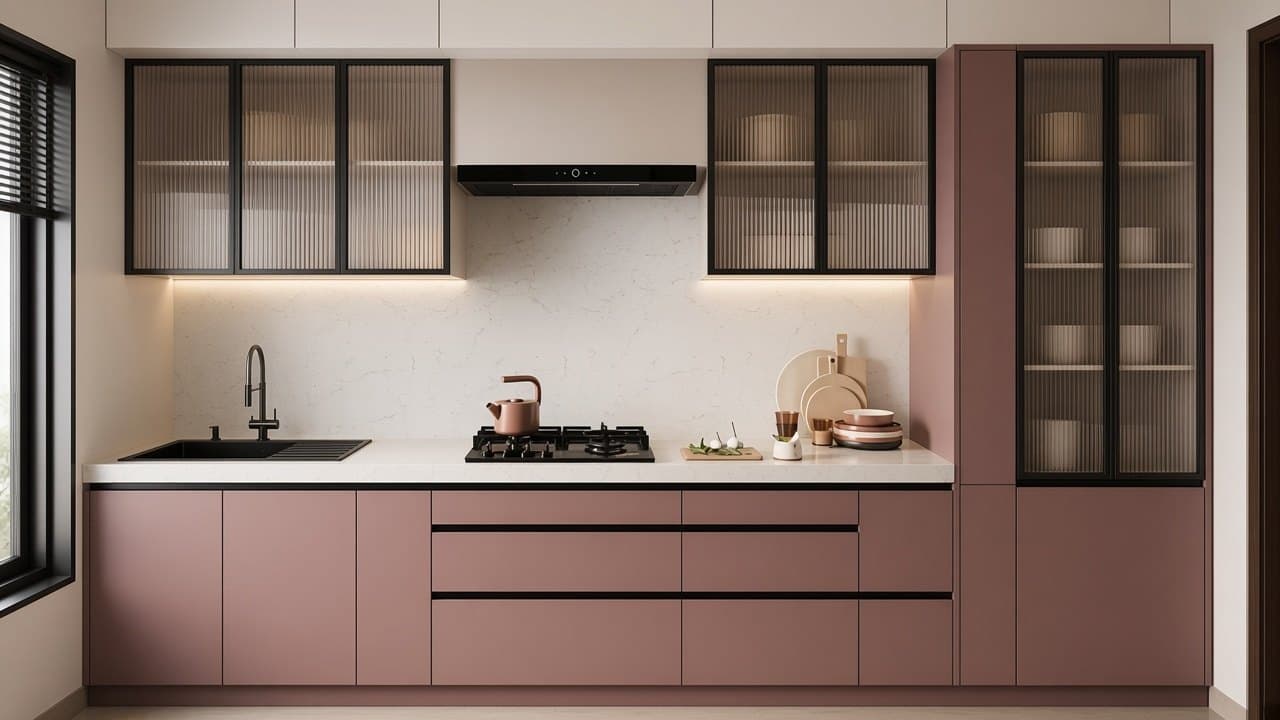
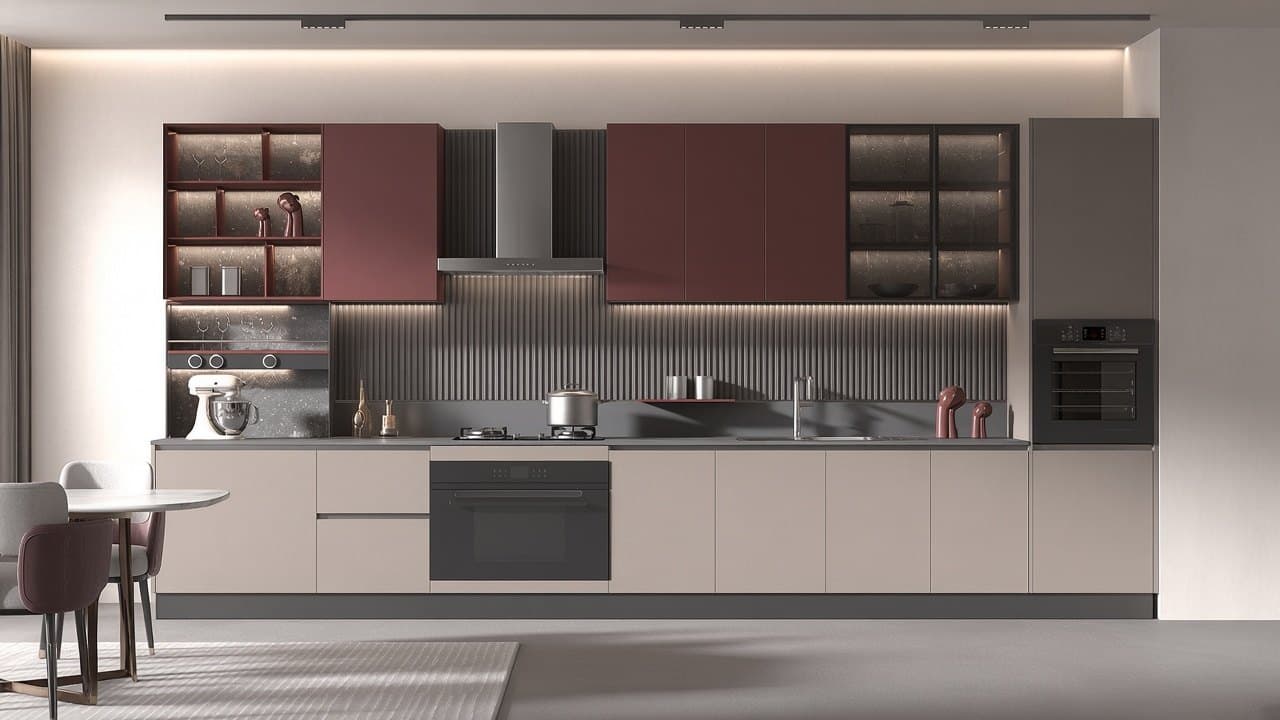
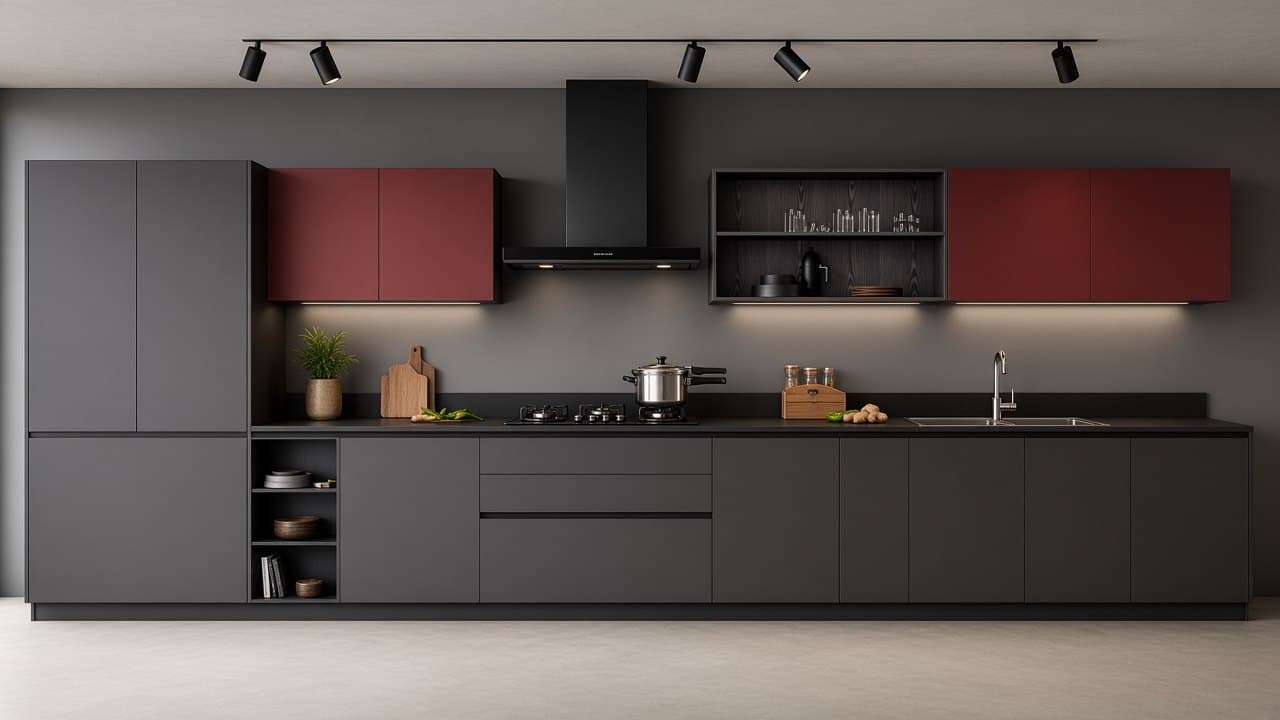
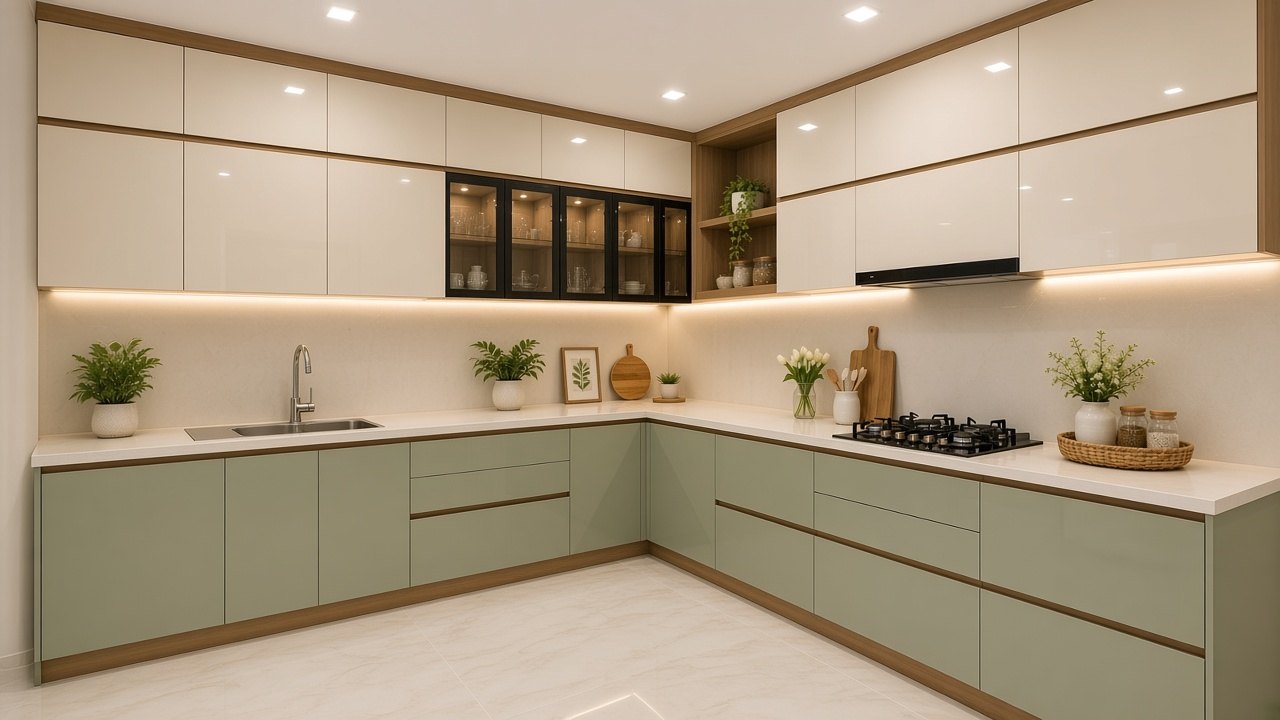
- Hybrid is normal — matte laminate below + acrylic or gloss above; write both into the quote.
Lock These Lines Before You Pay
Named finish (brand, series/code, thickness); substrate and which zones get which finish; edge method (Homeli and Studio Matrx favour machine banding / PUR over cheap tape or EVA in humid cities); back-balancing on glossy shutters; single-shutter replacement path and retained shade or coating code.
How We Approach It at Make My Space
Our kitchen packages use a BWP-grade plywood carcass, with a premium aluminium kitchen option when that structure fits the brief. Shutter finish is chosen zone by zone so the hob run and the display wall are not forced into one material. We complete home interiors in 45 days and back them with a 10-year warranty; modular kitchens start at ₹3.5 lakh and full home interiors start at ₹10 lakh.
Frequently Asked Questions
Which shutter finish is best overall for an Indian kitchen?
No single winner. Laminate is usually safest for busy base cabinets. Acrylic suits glossy uppers if you will wipe fingerprints. PU fits accent pieces. Membrane suits profiled doors kept away from heat.
Is acrylic the same as high-gloss laminate?
No. Acrylic uses a thicker PMMA sheet with deeper mirror gloss. High-gloss laminate can look similar from across the room but is a different product—ask for sheet name and thickness.
Will membrane peel near the stove?
It is the most heat-sensitive of these four. Studio Matrx and FurniRevive describe foil softening and edge lift near sustained hob heat; keep membrane off the cooking wall.
Is PU worth the premium over laminate?
For seamless custom colour on a careful-use feature shutter, often yes. For every base unit in a heavy-cooking kitchen, laminate usually costs less to live with (Homeli, WoodAge).
Can I mix finishes in one kitchen?
Yes. Beautiful Homes, Homeli and WoodAge all endorse intentional mixes—typically two finishes, same colour temperature, roles written on the BOQ.
Planning a kitchen in Raipur? See our modular kitchens in Raipur.