Thermofoil Wrapped Cornice and Pelmet Profiles: Materials, Edges and Longevity
What kitchen cornice and pelmet trims are made of, why thermofoil wraps lift near heat, how to plan LED pelmets, and Nov 2026 India material prices.
In this guide 9 sections
Look at a finished modular kitchen and your eye goes to the shutters, the countertop and the backsplash. What quietly makes it look finished, though, are the thin strips along the top and bottom of the wall cabinets. They are called the cornice and the pelmet, and they decide whether your wall units look like built-in furniture or like boxes screwed to a wall.
They are small parts, so they rarely get much attention in a quote. But they sit in two of the harshest spots in the kitchen: near the ceiling where hot, greasy air collects, and just above the cooking zone where steam rises. This guide explains what these trims do, what they are made of, why thermofoil-wrapped profiles sometimes lift, and how to choose trims that last.
What Cornice and Pelmet Actually Do
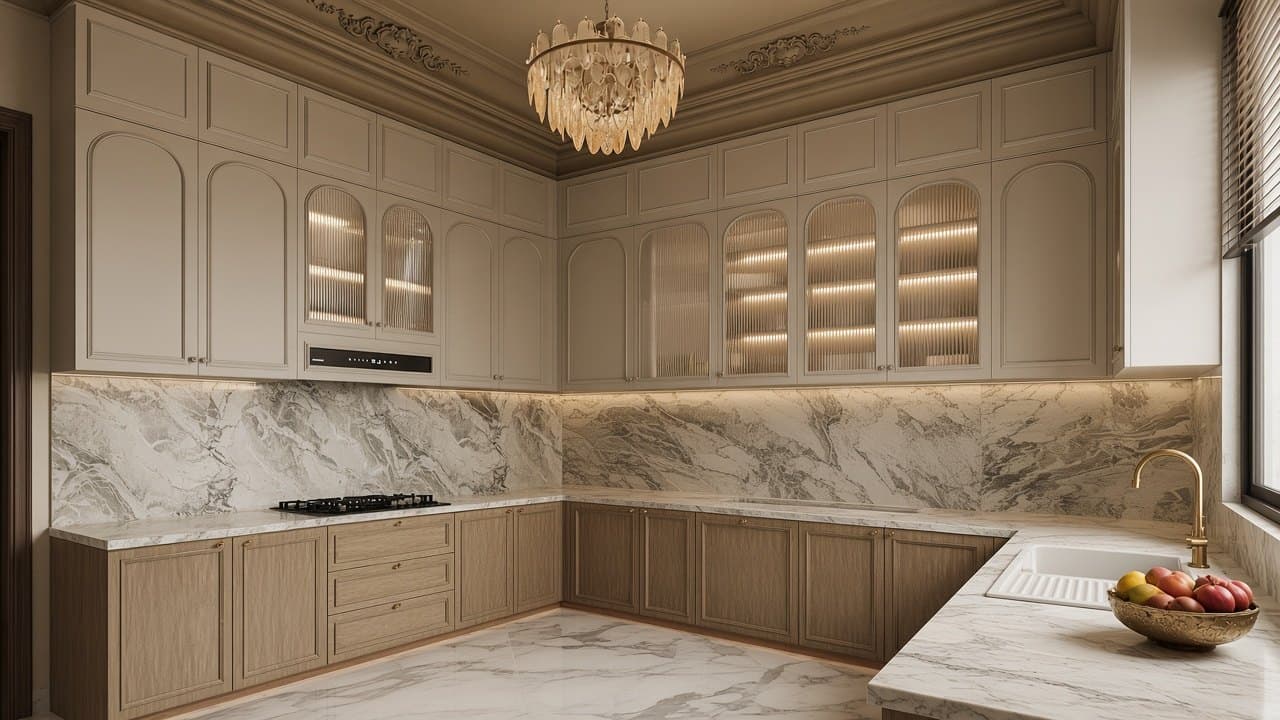
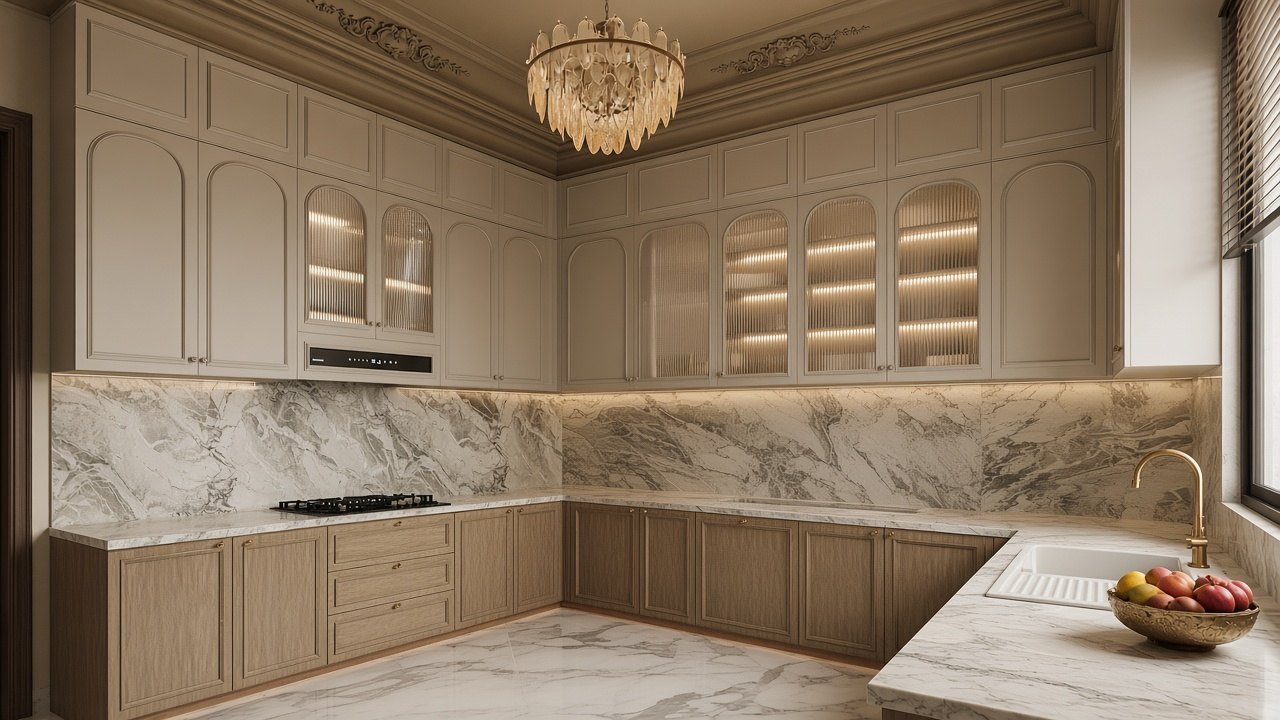
A cornice is the moulding fitted across the top of a run of wall cabinets. It caps the raw top edge of the carcass and either closes or disguises the gap between the cabinets and the ceiling.
A pelmet is the matching strip fitted along the underside of the wall cabinets. It hides the bottom edge of the shutters when they are closed and, in its "light pelmet" form, creates a channel that hides an LED strip and its wiring.
Neither is structural. They are finishing trims, which is exactly why they are easy to under-specify. A cheap trim does not make the cabinet fall down, but it can be the first thing in your kitchen that starts to peel, warp or collect grime.
Common Profile Shapes
Profiles come in three broad families:
- Square or flat profiles, typically 16 to 35 mm tall. They suit handleless, slab and contemporary kitchens and are the easiest to cut cleanly at a corner.
- Tangent or softly curved profiles, around 30 to 50 mm tall. They suit transitional or shaker-style shutters, but any imperfection in a corner joint shows more on a curved face.
- Classic or ornate profiles, 50 to 75 mm or taller. They belong with traditional and painted kitchens and need careful compound cuts at the corners.
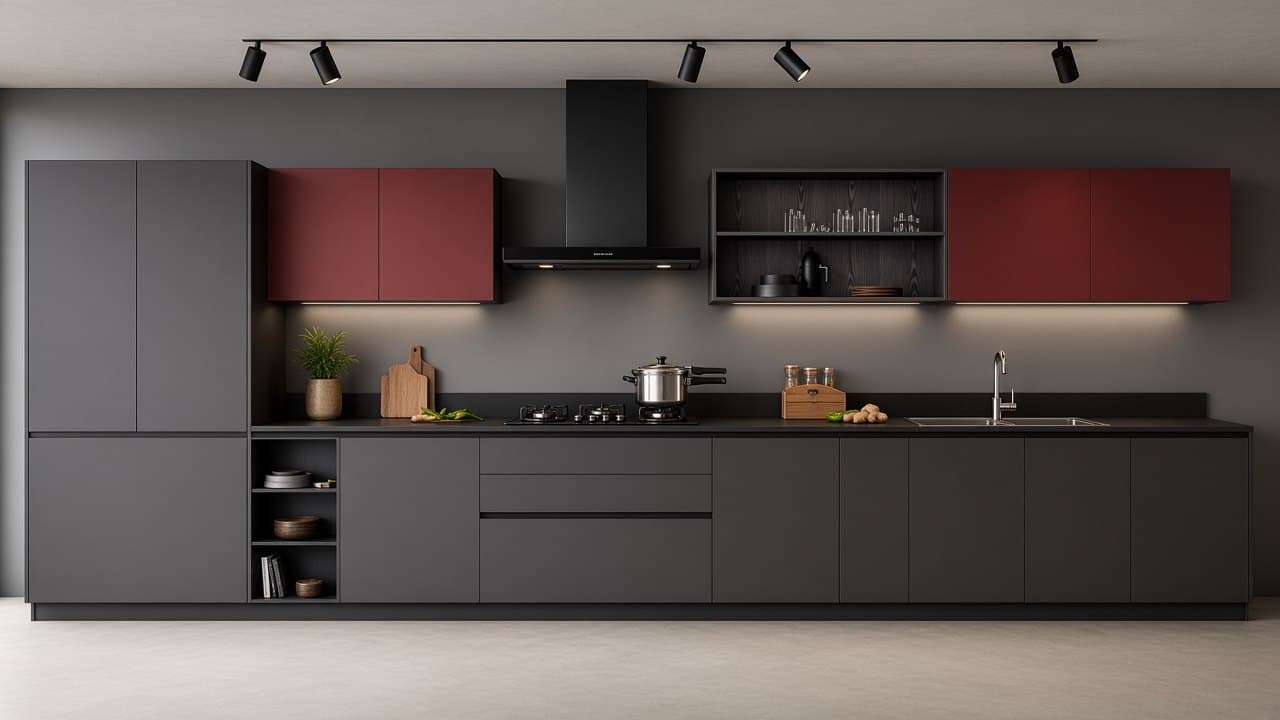
Most modern Indian kitchens use a square profile or skip the decorative cornice altogether and take the wall units right up to a false ceiling or loft. Even then, the underside pelmet often stays, because it hides the shutter edge and the under-cabinet lights.
What the Trims Are Made Of
Thermofoil (Membrane) Wrapped MDF
This is the most common way to make a trim that matches your shutters exactly. A strip of MDF is cut or routed to shape, adhesive is applied, and a thin PVC foil is heated and vacuum-pressed over the face and edges so it wraps the profile in one continuous skin. In India this is usually called a membrane finish.
Its strengths are real. The foil follows curves and grooves that a flat laminate sheet cannot, there is no separate edge band to lift at the face, and the colour is consistent along the whole length.
Laminated or Edge-Banded Board
A flat strip of board, faced with laminate and edge-banded like a shutter, works well for square profiles. It is simple, matches laminate shutters closely and is easy to repair or replace. The weak point is the edge band, so the edges facing the cooking zone need a well-bonded band.
Solid Wood and Wooden Mouldings
Carved or machined wooden mouldings suit classic kitchens and can be polished to match veneer. They need a good sealed finish, because bare timber near a cooking zone takes on grease and moisture.
Aluminium Profiles
Aluminium is rarely the decorative cornice itself in Indian homes, but it is the right material for the LED channel inside a light pelmet. The aluminium channel protects the strip from dust and grease, helps it shed heat, and carries a frosted cover for an even glow. Kitchen lighting specialists recommend always using a profile in kitchens rather than bare LED tape.
Why Thermofoil Profiles Lift, and Where
The same heat that bonds thermofoil to MDF during manufacture can weaken that bond later. Cabinet makers consistently report that thermofoil is water-resistant but not waterproof, and that heat and steam are its main enemies. Once the foil lifts or is scratched through, the MDF underneath can take in moisture and swell.
The places where it tends to show first are predictable:
- Above and beside the hob, where heat and greasy steam rise past the pelmet every time you cook.
- Beside or above a built-in oven, especially during long, hot cycles.
- Above a kettle, rice cooker or coffee machine that vents steam straight up at the cabinet underside.
- Near the chimney duct, depending on how it is insulated.
An Indian kitchen manufacturer's guide to membrane finishes makes a useful point: the risk depends on the whole system, meaning the foil, the adhesive, the press process and the appliance clearances. Its advice is to map every heat and steam source on the drawing before you finalise a finish, and to choose a different finish for a spot the membrane supplier will not accept in writing.
Repair is also limited. A small lift can sometimes be re-bonded by the fabricator, but larger failures usually mean replacing the piece. Foil colours also get discontinued, so it pays to record the exact foil code at handover.
Planning a Light Pelmet Properly
If you want under-cabinet lighting, plan it at the design stage, not after installation:
- Fix the aluminium channel first, close to the front edge of the cabinet underside, so the pelmet hides the strip but not the light.
- Route the cable into the cabinet, not along the wall, and keep the driver where it can be reached later.
- Use end caps on the profile so dust and grease do not collect inside.
- Keep the pelmet above the hob in a heat-tolerant material, or ask for a laminated or aluminium pelmet section over the cooking zone even if the rest of the run is thermofoil.
A lighting guide from an Indian manufacturer notes that pelmet and cove lighting needs to be planned into the carcass, because it cannot be retrofitted cleanly.
What These Materials Cost in India (November 2026)
Trims are usually bundled into the cabinet price, but knowing the underlying material costs helps you judge a quote. Indicative ranges read in November 2026:
| Item | Indicative range | Source basis |
|---|---|---|
| PVC membrane or foil finish on MDF | ₹151–₹259 per sq ft | Bengaluru designer rate library |
| MDF board, 18 mm | ₹43–₹70 per sq ft | Bengaluru designer rate library |
| ABS edge band, 2 mm | ₹9–₹19 per running foot | Bengaluru designer rate library |
| Teak wood moulding | ₹35–₹100 per foot | IndiaMART supplier listings |
| Pelmet or cove LED in aluminium profile | ₹1,200–₹2,800 per running foot | Indian kitchen manufacturer guide |
These are supply-side indicators, not installed kitchen prices, and they vary by city, brand and quantity. Always compare quotes for the same core, finish and lighting scope.
A Simple Checklist Before You Sign
- Ask what each trim is made of: thermofoil MDF, laminated board, wood or aluminium.
- Ask which trim sits directly above the hob, oven and kettle spot, and what finish it has.
- Confirm the foil or laminate code is written into your specification sheet.
- If you want under-cabinet lights, confirm aluminium channels, end caps and an accessible driver.
- Check that corner joints are tight and that the cornice meets the ceiling or loft cleanly.
How Make My Space Handles the Finishing Details
At Make My Space, we design trims, lights and shutters together with the cabinet, so the finish near your hob is chosen for heat, not just for looks. Our cabinets are built on a BWP plywood carcass, with a premium aluminium kitchen option for homeowners who want an all-metal build. Every kitchen is completed within 45 days and carries a 10-year warranty; modular kitchens start from ₹3.5 lakh and full home interiors start from ₹10 lakh.
FAQ
What is the difference between a cornice and a pelmet?
A cornice runs along the top of the wall cabinets and closes the gap to the ceiling. A pelmet runs along the underside, hides the bottom edge of the shutters and can hide LED lighting.
Is thermofoil the same as a membrane finish?
Yes, in Indian kitchen quotes they usually mean the same thing: a thin PVC foil heat- and vacuum-pressed over shaped MDF so it wraps the face and edges in one skin.
Why is the trim above my hob peeling?
Heat and greasy steam can weaken the bond between the foil and the MDF. Keep kettles away from the cabinet underside, run the chimney while cooking, and use a heat-tolerant trim over the cooking zone.
Do I need a cornice in a modern kitchen?
Not always. Many modern kitchens take the wall units up to a loft or false ceiling. A pelmet is still useful if you want hidden under-cabinet lighting.
Can a lifted thermofoil trim be repaired?
Sometimes a small lift can be re-bonded, but larger damage usually means replacing the piece. Keep the foil code so a replacement matches.
Want to see these finishes in person? Visit our modular kitchen experience centre in Raipur.